
We design and build healthcare software for the people who deliver care and the people receiving it. That includes patient experiences, clinician tools, operational systems and the secure services connecting them.
Healthcare products have to be usable under pressure, work with existing clinical workflows and protect sensitive information at every step. We account for those constraints during product discovery, architecture and delivery — not after launch.
Our teams bring experience across telemedicine, healthcare integration, mobile products and compliant cloud infrastructure, giving clients one engineering partner from early product definition through production support.
Custom healthcare software development makes sense when off-the-shelf tools force your clinicians or patients into a workflow that doesn't fit, when data has to move between systems that weren't designed to talk to each other, or when the product itself is what you sell. In each case we start with the workflow and the data, then decide what to build, what to integrate and what to leave to existing vendors.
Healthcare software we've worked on
Buyers rightly ask a healthcare software development company to show shipped healthcare work, not general apps with a health label. These are the healthcare and life-sciences projects documented in our case studies.
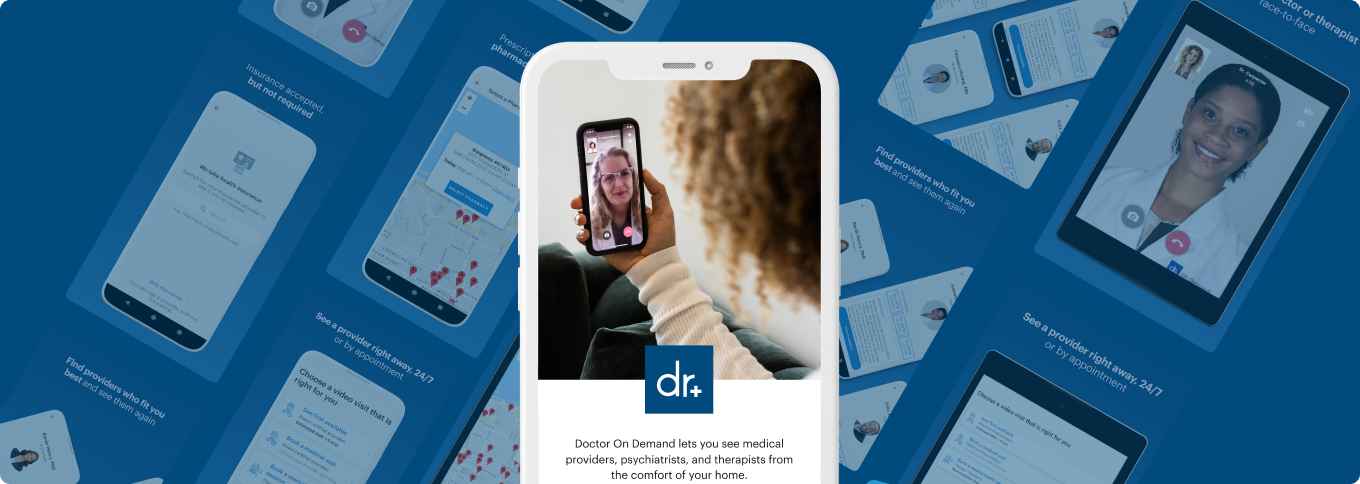
Telemedicine platform & mobile app
ELEKTRIK team members worked on Doctor On Demand's telemedicine platform: native iOS and Android apps, a web platform with feature parity, HIPAA-aligned video visits, scheduling and payments, and EHR and prescription workflows.
Read the Doctor on Demand case study →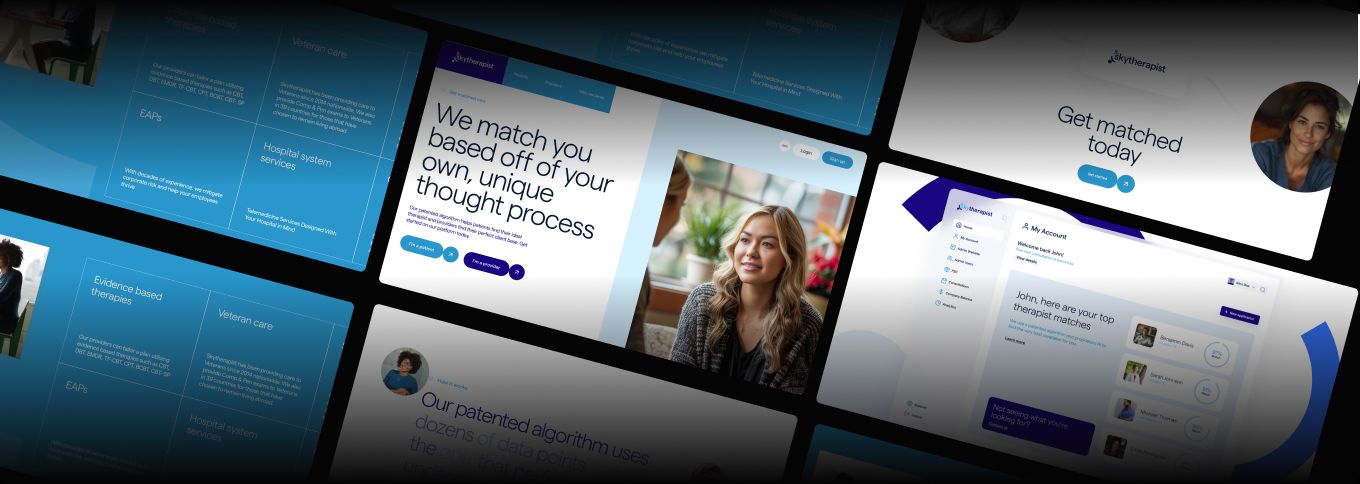
AI-powered patient–provider matching platform
A web platform with an AI matching system that weighs 12+ patient and provider variables — specialization, experience, treatment history and ratings — and shows patients why a provider was recommended.
Read the Sky Therapist case study →
Generative AI platform for pharmaceutical R&D
Generative AI models and analytics embedded into an existing pharmaceutical R&D workflow, with compliance and model-validation steps agreed with the research teams.
Read the Amgen case study →Patient portals & apps
Scheduling, intake, records, messaging, care plans and account management across web and mobile.
Clinician & care-team tools
Workflow software that reduces manual steps while keeping clinical context easy to find.
Digital health platforms
Secure product foundations for virtual care, chronic care, diagnostics and patient engagement.
Healthcare data & analytics
Governed reporting, operational dashboards and de-identified data pipelines for approved use cases.
Compliance-focused engineering
Access controls, encryption, audit logging, retention policies and HIPAA-aligned architecture.
Modernization & support
Incremental replacement of fragile applications, plus monitoring, maintenance and ongoing product delivery.
Typical healthcare software development engagements
Patient engagement
Self-service access, reminders, education and secure communication that fit the care journey.
Clinical operations
Queues, referrals, coordination and documentation tools shaped around how teams actually work.
Remote care
Connected monitoring, questionnaires and care-plan follow-up across web and mobile.
Provider administration
Credentialing, scheduling, capacity and quality workflows for growing care organizations.
Legacy product modernization
Replacing difficult-to-maintain healthcare applications without a risky all-at-once rewrite.
Digital health MVPs
Focused first releases designed to validate workflows while preserving a path to regulated scale.
Healthcare delivery experience
Our teams have built telemedicine, clinical integration and patient-facing products in production.
Clinical workflow first
We learn the real task, handoff and exception paths before deciding what the software should do.
Security in the architecture
Identity, permissions, encryption and auditability are foundational design decisions.
One product team
Product, design, engineering, integration and cloud work stay coordinated under one delivery model.
Built for handover
Your organization retains the code, infrastructure, documentation and operating knowledge.
Long-term support
We can stay with the platform through monitoring, upgrades, new workflows and scale.
How to choose a healthcare software development company
Most healthcare software projects that go wrong do so for reasons that were visible before the contract was signed. Use these questions with any vendor, including us.
Ask for shipped healthcare work
Ask which healthcare products the team has worked on, what part of the product they owned and whether it is still running. A portfolio of general consumer apps tells you little about handling patient data, clinical users or integration with EHR systems.
- Which patient-facing or clinician-facing products have you shipped?
- Which parts did your team own — design, mobile, backend, integrations, infrastructure?
- Who on the proposed team worked on those projects?
Check how they handle HIPAA in practice
Being HIPAA compliant is a property of your organization and its operations, not something a vendor can hand you. What a development partner can do is build the technical safeguards — access control, encryption, audit logging, retention — and work inside your compliance program. A serious vendor will discuss a Business Associate Agreement (BAA) early when they will handle protected health information.
- Will you sign a BAA if your team handles protected health information?
- How are access, audit logs and environments separated between development and production?
- What happens if there is a security incident — who is notified, and how fast?
Confirm interoperability experience
Most healthcare products eventually need to exchange data with an EHR, lab, pharmacy, payer or device. Ask which standards the team has used — HL7 v2, FHIR, SMART on FHIR, DICOM — and how they handle vendor access, patient matching and failed messages. Integration timelines are often set by the EHR vendor's approval process, not by coding.
Agree what happens after launch
Healthcare software needs monitoring, security updates, OS and dependency upgrades and new workflows long after launch. Agree who supports the product, how incidents are handled and how releases are rolled back if something goes wrong. Make sure you will own the source code, cloud accounts and documentation.
Custom or off-the-shelf healthcare software?
Off-the-shelf software is usually the better choice for standard back-office needs where your workflow matches the product. Custom healthcare software development is worth the investment when the workflow is your advantage, when several systems need to work as one experience for patients or clinicians, or when you are building a digital health product to sell. Many projects combine both: custom patient and clinician experiences on top of existing EHR and billing systems.
- Digital health
- Virtual care
- Hospital systems
- Health plans
- Diagnostics
- Medical technology
- 01Product & workflow discoveryWe map users, clinical workflows, business goals, data and delivery constraints.
- 02Risk-aware architectureSecurity, privacy, integrations and operational ownership are designed before implementation.
- 03Prototype & validateKey experiences are tested with stakeholders before the full build accelerates.
- 04Build & integrateWorking software ships in reviewable increments with automated quality checks.
- 05Launch safelyProduction readiness, monitoring, training and support are handled as part of release.
- 06Operate & improveUsage, reliability and feedback guide the next delivery cycles.
What does a healthcare software development company do?
It designs, builds, integrates and supports software used in care delivery or health products — patient apps and portals, clinician tools, telehealth platforms, EHR integrations and the secure cloud services behind them — while working within the client's privacy, security and regulatory requirements.
What kinds of healthcare software do you build?
Patient and clinician apps, care platforms, operational tools, portals, data products and the secure services behind them.
When is custom healthcare software development worth it over an off-the-shelf product?
When your workflow is a competitive advantage, when several systems need to act as one experience for patients or clinicians, or when the software is the product you sell. For standard back-office needs that match an existing product, off-the-shelf is usually cheaper and faster.
Will you sign a Business Associate Agreement (BAA)?
Yes, where our team will create, receive, store or transmit protected health information on your behalf. We confirm the data our team will access during discovery so the agreement reflects the actual work.
Can you work with an existing healthcare product?
Yes. We can audit, stabilize and modernize an existing application or extend it with new workflows and integrations.
How do you approach HIPAA requirements?
We build HIPAA-aligned technical controls and work within your broader compliance program, including BAAs where required.
Can you integrate with our EHR or other clinical systems?
Yes. We work with FHIR, HL7 v2, SMART on FHIR, EHR APIs and other healthcare interfaces. We confirm vendor access, data flows and workflow requirements during discovery.
How long does healthcare software development take?
A focused first release commonly takes several months, while larger platforms are delivered in phases. After discovery, we provide a roadmap based on workflows, integrations, compliance needs and launch scope.
How much does custom healthcare software cost?
Cost depends on product scope, clinical complexity, integrations, data migration and compliance requirements. We define the smallest credible release first, then provide a phased estimate before development begins.
Do you design the product as well as build it?
Yes. Product discovery, clinical workflow mapping, UX and interface design can be included alongside engineering and delivery.
Can you build mobile and web experiences together?
Yes. We design shared services and coordinated patient, clinician and administrative experiences around the same product model.
Can you help prepare for security and compliance reviews?
Yes. We document architecture, data flows, access controls, audit logging and operating responsibilities, and support your team during technical reviews. Final legal and regulatory approval remains with your compliance advisors.
Who owns the finished software?
You retain the source code, infrastructure and documentation from the engagement.
Healthcare guides and related services
- Medical Software Development Company: The 2026 Guide to Custom Healthcare SolutionsWhat a medical software development company does, platforms, tech stacks and partner selection.
- The HIPAA-Compliant App Development ChecklistThe technical and operational checklist we use on HIPAA-regulated apps.
- HL7 vs FHIR: A Practical Integration Guide for EHR ProjectsWhen to use HL7 v2, FHIR or both for EHR integration.
- Healthcare App Development Cost: What Drives the BudgetWhat drives the budget of a healthcare app, and how to scope the first release.
- How We Built Doctor On Demand's Telemedicine PlatformThe story behind the Doctor On Demand telemedicine platform work.
- Medical Software Development Company: The Compliance-First Buyer's Guide That Saves You From Seven-Figure MistakesA buyer's guide to vetting medical software vendors.
- Healthcare Systems IntegrationFHIR, HL7 v2 and EHR vendor integrations.
- TelemedicineVideo visits, scheduling and remote care platforms.
- Remote Patient MonitoringDevice data, clinical alerts and triage for monitoring programs.
Build healthcare software people can depend on.
Tell us who the product serves, the workflow it supports and where the current process breaks down.