
Generative AI can answer questions, draft documents, summarize records and carry out multi-step tasks — but only when it is grounded in the right data, limited to the right actions and measured against real examples. We build that layer around the model.
Our work covers LLM applications and copilots, RAG systems that answer from your documents, tickets and databases, and AI agents that use tools and APIs inside your business systems, with human review where it matters.
We choose models on measured quality, cost and data requirements, not hype, and design the system so models can be swapped as the market changes.
Generative AI we've shipped
Generative AI projects documented in our case studies, both built into the client's existing systems.
Generative AI chatbot for aviation customer service
A generative AI chatbot for aviation customer service built on Google Cloud's Gen AI tools, with prompt engineering for complex aviation terminology, a security layer and real-time integration with internal systems.
Read the GA Telesis case study →
Generative AI platform for pharmaceutical R&D
Generative AI models that simulate and predict molecular interactions, embedded into Amgen's existing R&D infrastructure, with compliance steps aligned to FDA and EMA guidance.
Read the Amgen case study →LLM applications & copilots
Assistants inside your product or internal tools, designed around a specific job to be done.
RAG development
Ingestion, chunking, embeddings, hybrid search and permissions over your own content.
AI agent development
Multi-step agents with tool use, function calling, action logs and human approval steps.
Generative AI chatbots
Customer and employee chatbots grounded in your knowledge, with escalation to people.
Evaluation & guardrails
Test sets, regression evals, PII redaction, prompt-injection defence and audit trails.
Model selection & cost control
Routing, caching and batching across commercial and open-weight models.
Typical generative ai development engagements
Customer service assistants
Chatbots that answer from your help content and records, and hand off when unsure.
Knowledge search
RAG over policies, manuals, tickets and contracts for employees who need fast answers.
Document drafting & summarization
First drafts and summaries of reports, notes and correspondence for review.
Operations agents
Agents that look up records, prepare updates and route work across systems.
Research acceleration
Generative models that help experts explore options faster, with validation steps.
Sales & support copilots
Assistants that prepare replies, call notes and CRM updates for people to approve.
Production, not demos
Evaluation, monitoring and fallbacks are part of the build from the first week.
Integrated with your systems
We connect AI to your data and tools through governed APIs.
Regulated-industry habits
Data minimization, redaction and audit logging come from our healthcare and financial work.
Model-agnostic
Switch providers or self-host as prices and quality change.
Cost you can forecast
Routing and caching keep token spend predictable at scale.
Clear ownership
Your repositories, cloud accounts, prompts and evaluation sets.
How to choose a generative AI development company
Generative AI demos are easy; reliable production systems are not. These questions help you compare any generative AI development company, including us.
Agent, assistant or RAG system?
Retrieval-augmented generation (RAG) answers questions from your own documents and data. An assistant or copilot helps a person do their work. An AI agent takes multi-step actions, such as looking up a record, drafting a reply and updating a system. Each carries different risks, so be clear which one you are buying before you compare vendors.
Ask how answers are grounded
Large language models can produce confident wrong answers. Ask how the system retrieves sources, shows them to users and refuses to answer when it can't find support. RAG development services should include work on document ingestion, chunking, search quality and access permissions — not only prompts.
- Can users see the sources behind an answer?
- What happens when the system can't find a good answer?
- Does the AI respect each user's document permissions?
Insist on evaluation before launch
A serious LLM development company builds a test set from real questions and tasks, scores every release against it and blocks changes that make quality worse. Without this, every prompt or model change is a gamble.
Put limits on what agents can do
AI agents should only have the permissions they need, log every action and hand consequential decisions to a person. Ask an AI agent development company how it limits tool access, prevents prompt injection and lets you review or undo actions.
Plan for cost, data and model changes
Model prices and quality change quickly. Ask how the system routes requests, caches results and swaps models without a rewrite, where your data is processed and stored, and whether providers may train on it. Make sure you own the code, prompts and evaluation sets.
- Healthcare & life sciences
- Financial services
- Aviation
- Enterprise operations
- SaaS
- Media
- 01Pick the use caseOne task with clear value and a measurable definition of good.
- 02Build the evaluation setReal examples and expected results collected before the prototype.
- 03PrototypeA working version scored against the evaluation set.
- 04Harden & integratePermissions, logging, guardrails, fallbacks and integration into your tools.
- 05Launch & monitorQuality, cost and user feedback tracked in production.
- 06ExpandNew use cases added on the same evaluation and governance foundation.
What does a generative AI development company do?
It builds software around large language models and other generative models — assistants, chatbots, RAG systems and agents — including the data pipelines, integrations, evaluation and guardrails needed to run them reliably.
What are RAG development services?
Building retrieval-augmented generation systems: preparing and indexing your documents and data, searching them for each question and having the model answer from what was found, with sources and permissions respected.
Do you build AI agents?
Yes. We build agents that use tools and APIs to complete multi-step tasks, with limited permissions, logged actions and human approval for consequential steps.
Which LLMs do you work with?
Commercial models such as OpenAI, Anthropic and Google Gemini, and open-weight models such as Llama and Mistral. We choose based on measured quality, cost and data requirements.
How do you stop the AI from making things up?
Grounding answers in retrieved sources, refusing when support is missing, strict output formats, confidence thresholds and regression evaluations on every release.
Is our data safe with generative AI?
We minimize and redact sensitive data, use providers and settings that don't train on your data, and can keep processing inside your own cloud for regulated workloads.
Can you improve a generative AI feature we already have?
Yes. We measure current quality, find the failure patterns and fix retrieval, prompts, routing or data — then lock in the improvement with evaluations.
AI guides and related services
- AI Development Services in 2026: The Buyer's Guide Most Vendors Don't Want You to ReadA buyer's guide to AI development services: scope, team, budget and red flags.
- Custom AI Development vs Off-the-Shelf AI Tools: What Should Your Business Choose?When custom AI beats off-the-shelf AI tools, and when it doesn't.
- How Artificial Intelligence Is Reshaping the Future of Software DevelopmentHow AI is changing software development.
- AI Implementation & DevelopmentThe full AI practice, including machine learning and MLOps.
- Custom Software DevelopmentThe custom platform your AI features live inside.
- Cloud, DevOps & Platform EngineeringInfrastructure, monitoring and cost control for AI workloads.
Generative AI Development in production
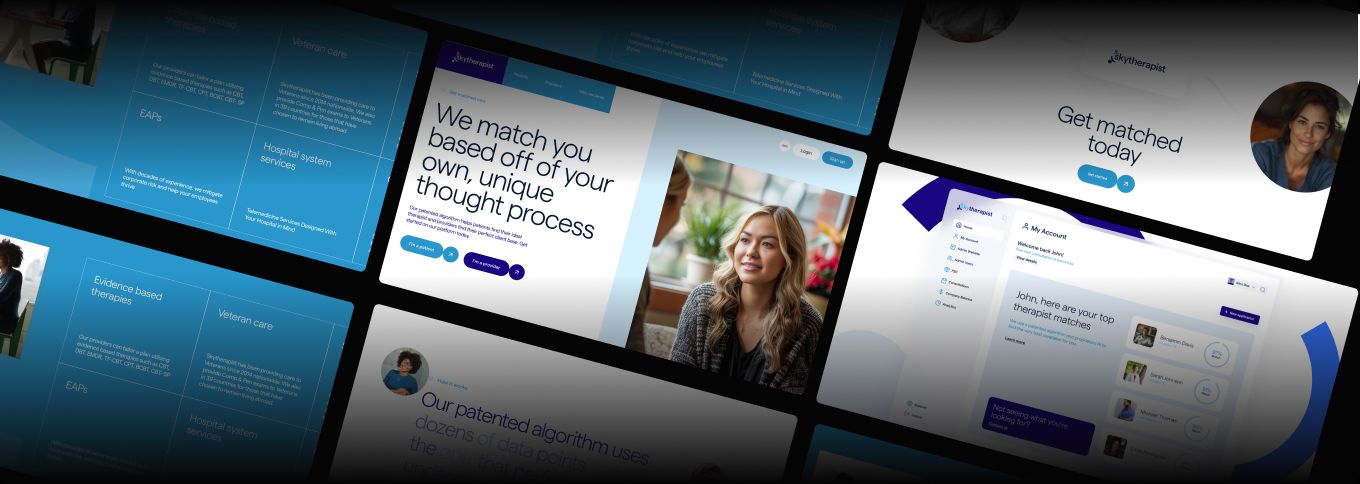
AI matching · Web · Telehealth
Facial recognition · Biometrics · Security
Ship generative AI that holds up in production.
Bring us the task you want AI to handle and the data it should use. We'll come back with a scoped path to a measured first release.